Project Delivery - Design-Bid-Build

The Design-Bid-Build (DBB) method of project delivery is easily the most familiar to owners, architects and contractors.

D. Brown Management Profile Picture
Share

No contractor should ever lose their ability to compete, win, and build profitable projects using this method of delivery. It keeps your estimating and operations teams sharp.
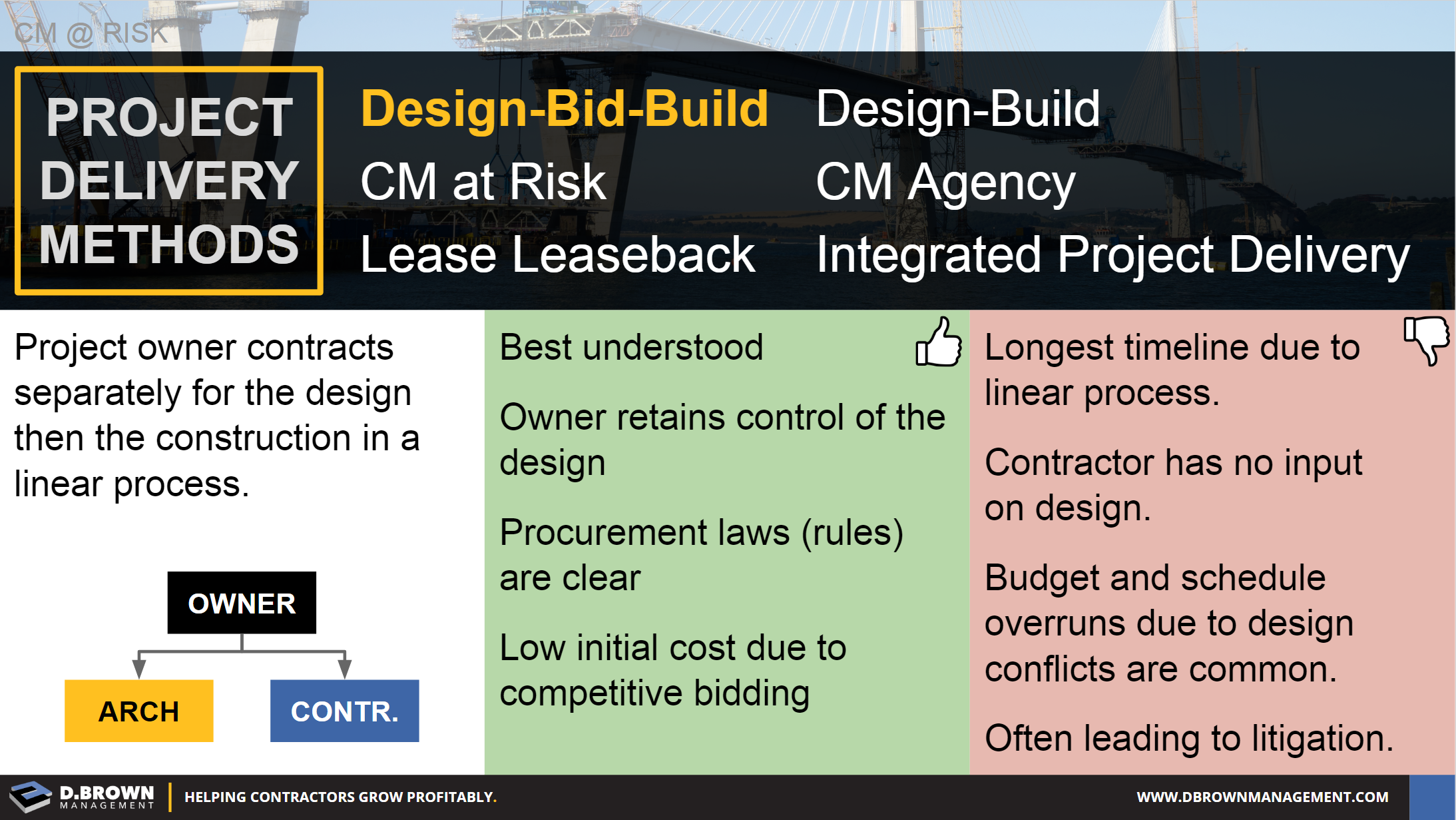
CM at Risk: Project Delivery Methods - Definition of Design-Bid-Build and pros and cons.

In this method, the project owner contracts separately with the architect for design and a single prime contractor for construction.  

  • It is the primary procurement method used for public works projects.
      
  • Due to the sequential design followed by the construction workflow, it has the longest timeline.

  • Contractors are typically forced into a competitive bidding situation, resulting in a low initial construction cost.

  • Because the contractors were not involved in the design phase, there are frequently cost and schedule overruns that sometimes end in litigation.  

The negatives must be weighed against the positives for this project delivery method. In many cases this is absolutely the right method for the project.


Project Delivery - Design-Bid-Build
The preferred project delivery method. There is a reason 100 of ENR's Top 400 General Contractors use CMAR as the project delivery method for over 75% of their work. Leverage CMAR as part of your growth strategy....

Project Delivery - Design-Bid-Build
The preferred project delivery method. There is a reason 100 of ENR's Top 400 General Contractors use CMAR as the project delivery method for over 75% of their work. Leverage CMAR as part of your growth strategy....

Muhammad Ali - Pebble in the Shoe
Construction contracting is largely a game of operational excellence. Between the massive changes going on in the industry and daily operations it is easy for leaders and their teams to overlook the small opportunities for improvement every day.
Alignment and Ownership and Creating Value
As a construction company grows, it becomes increasingly important to align everyone on the team. Alignment comes from being transparent with your guiding principles or values and living them every day, starting with ownership.
Lean Principle - Observation (Gemba Walks and Learning to See)
One of the most important tools for improving productivity is going to the jobsite or work area and observing for an extended period of time with the intent to understand but not to immediately interact. Observation progresses through about 7 stages.