Uncomfortably Exciting - Being a S.M.A.R.T. Leader

Being a manager or a leader is not a choice or a job description. Success comes from being both and balancing them effectively.

D. Brown Management Profile Picture
Share

Managers must set goals that are S.M.A.R.T. (Specific, Measurable, Achievable, Relevant and Time Bound.  Leaders must be stretching their teams toward objectives that are beyond what anyone believes they can achieve

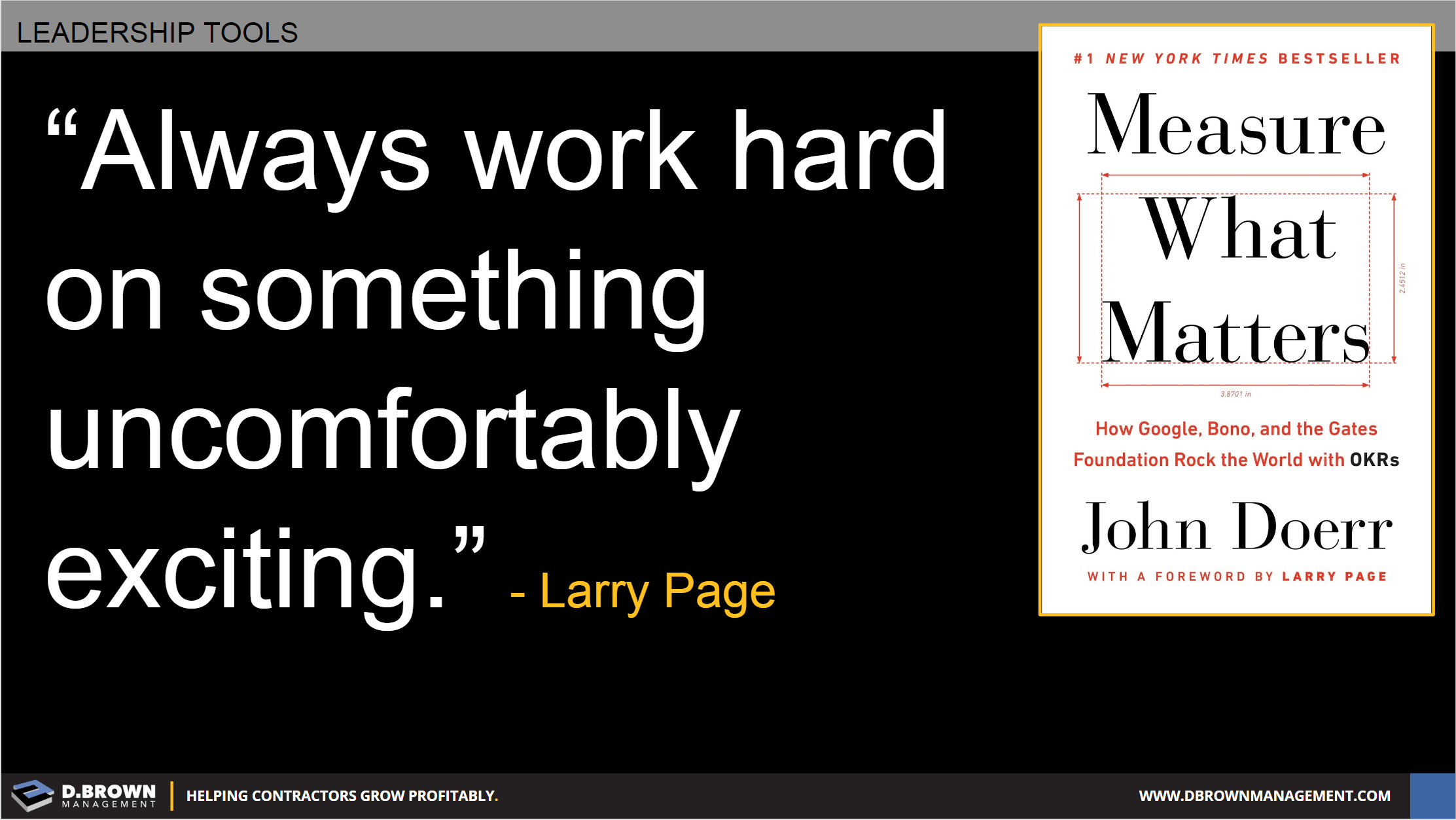
Quote: Always work hard on something uncomfortably exciting. Larry Page.

John Doerr and Larry Page describe these as two different types of OKRs (Objectives & Key Results):

Committed

These are the management level OKRs that must be accomplished no matter what:  

  1. Ask “What must be done?”
  2. Develop a plan
  3. Work that plan every day
  4. Follow up relentlessly. 

“It is not enough that we do our best; sometimes we must do what is required.”

Winston Churchill

Aspirational

These are the leadership level OKRs that, as Larry Page describes, must make the whole team “uncomfortably excited.” 

Aim high and ask the harder question:  “What would have to be true for this strategy to work?” rather than the simpler question of “What is currently true?” 

This is the difference between how an architect approaches things from the top down versus a builder who typically approaches from the foundation up.  


Accelerated Development - Closing the Gap
The shortage of critical talent in the construction industry will be 3X worse by 2020 and will continue to worsen through 2030. The only way that we will be able to close this gap is if we focus on accelerating the development of people.
About D. Brown Management
We are a management advisory firm working with contractors across the United States. We love the construction industry and believe it is an integral part of the backbone of our country.
Evolution of Project Delivery Methods
Project delivery methods for contractors will become increasingly more integrated from project owner through all key parts of the supply chain, which is a return to models used in the early 1900s with some modernization improvements.