
Think about the evolving leadership focus with career and company growth as being broken into two major parts:
- Prescriptive Direction: Giving and taking very specific direction and tactical skills training about plans, processes, tasks, and timelines, as well as using the various tools to accomplish the job.
- Principled Leadership: Far more ambiguous but sets the critical foundation of people, purpose, and path. Focuses on developing people for the long-term through tailored mentoring and coaching.
Build more effective teams, projects, and construction business by understanding these differences in people and role requirements.
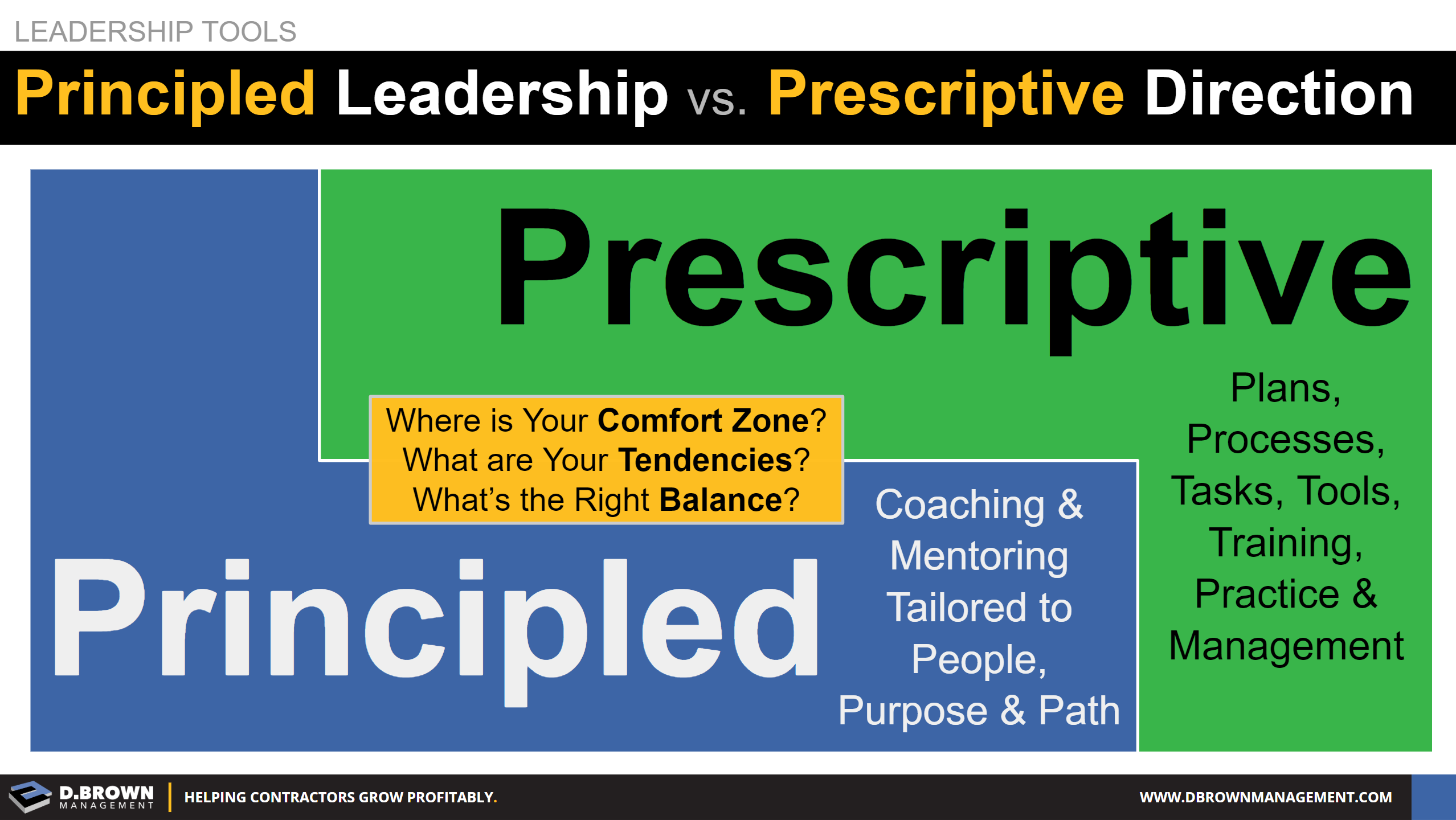
An effective organization needs people focused on each.
- Where is your comfort zone for learning and teaching? What about leading and following?
- Keep track of your conversations, emails, and actions for a week. How do you tend to interact? Do you give (or prefer receiving) very specific instructions with timelines, or do you stretch others trough questions and context?
How's your balance as an organization?
- Over time, too much focus on prescriptive direction will lead to a hollow organization because leadership capabilities in others will not be developed in the long-term.
- Too little focus on prescriptive direction will impact productivity and growth.
Know that development of people is always tricky. You'll never hit the right balance as a leader if you listen to everything your team says.
- You will always want to give slightly more prescriptive direction than someone says they need to ensure productivity and reinforce good habits.
- You will always want to provide more principled leadership than someone says they need to ensure you are stretching them to their fullest potential.
