Creating an Operating Rhythm

What are the critical meetings, communications and feedback systems that keep your contracting business running like clockwork?

D. Brown Management Profile Picture
Share

Daily  >> Weekly  >> Monthly >>  Quarterly >> Annually
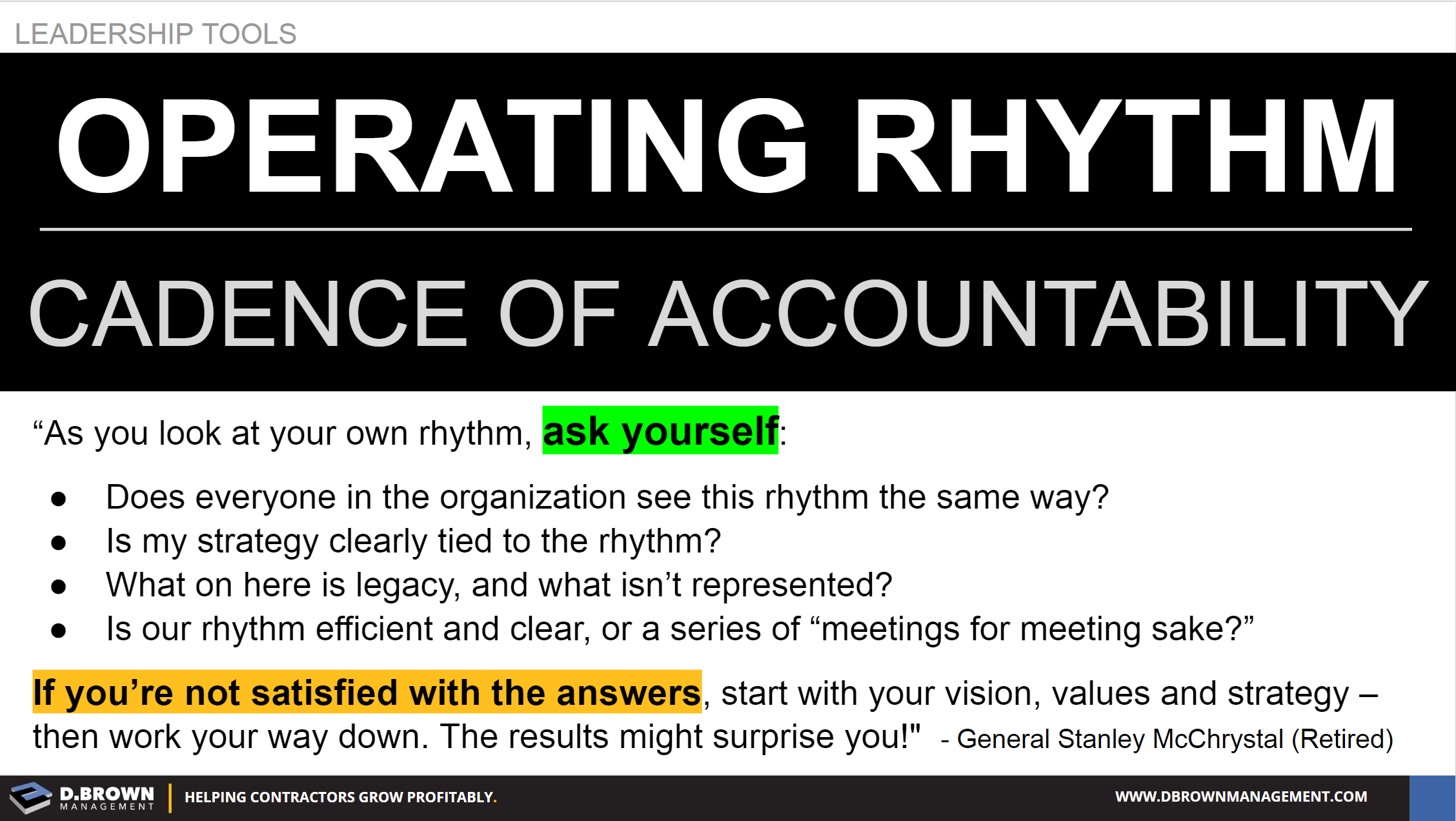
Leadership Tools: Operating Rhythm and Cadence of Accountability.

How do those Operating Rhythms at various levels; within different functional areas; in different geographic locations; and at different job sites interlock with each other effectively?  

Retired General Stanley McChrystal and his team talk about these Operating Rhythms in their books Team of Teams and One Mission

The team at FranklinCovey talks about Operating Rhythm as a Cadence of Accountability in The 4 Disciplines of Execution.

For a contractor to grow sustainably they need to move from “Doing Things” and ad-hoc communications into effectively integrated Operating Rhythms.  

When these changes don’t occur it causes stress on the organization and impacts profitability.  


Complexity of Thought and Planning Time Span
There are multiple dimensions of talent including personality traits, IQ, EQ, desire, knowledge and experience. One of the critical dimensions is what Elliott Jaques called “Time Span of Discretion” which is essentially a combination of:
Continuous Improvement - Takes or Saves Time
I am too busy to learn to improve the process! This statement is only funny because it is so true. It is one of the first mindsets you have to break within yourself and then within your team if you want to achieve consistent operational excellence.
Field Productivity - Talent Differentiation
Contractors can improve their field productivity significantly just through deliberate talent management processes. While the process of continuous forced differentiation seems harsh it is actually the kindest thing you can do for everyone on the team.