
We can survive days without water and weeks without food but seconds after losing blood flow we lose consciousness with death following in minutes.
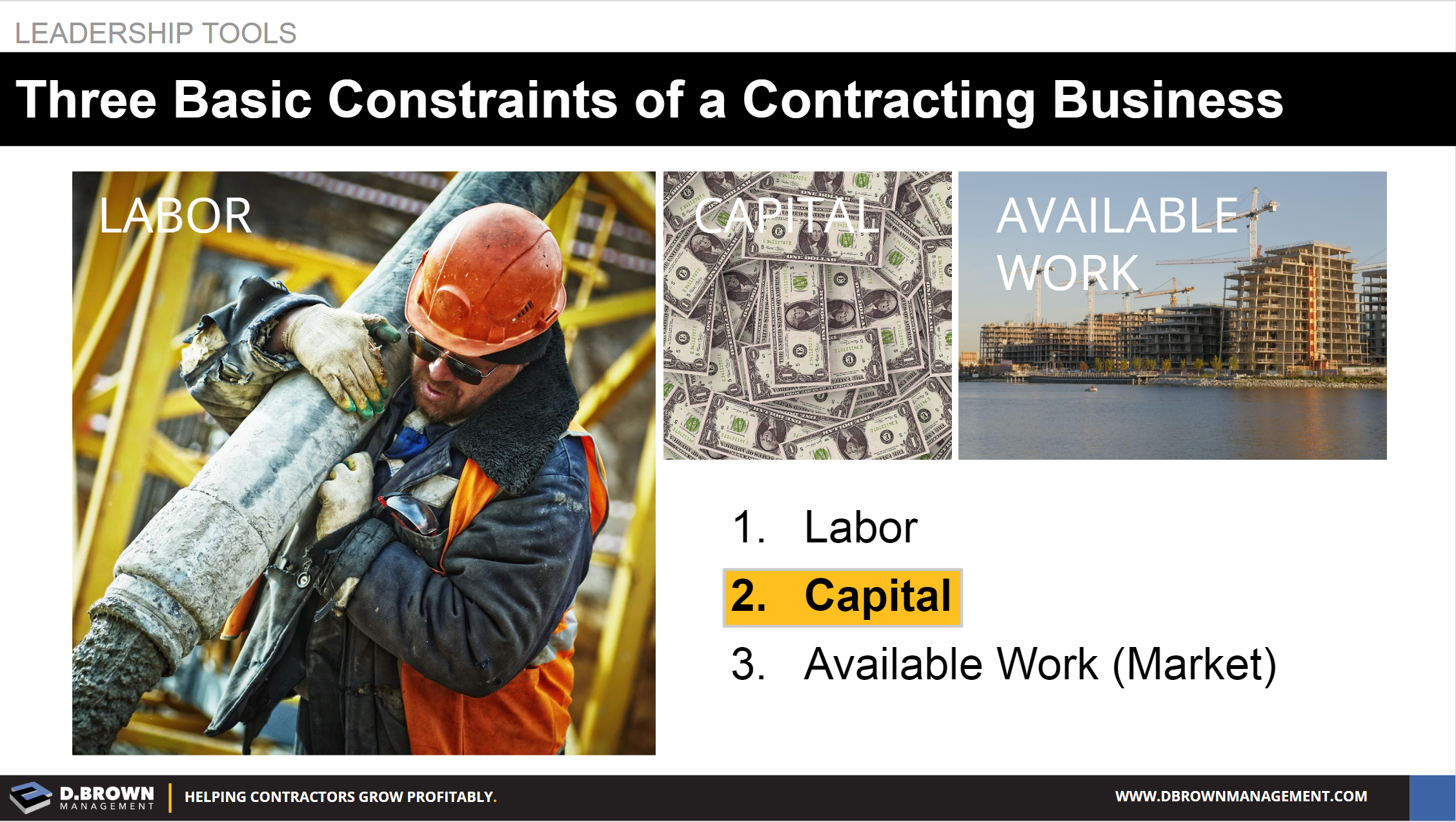
Conservative capital management enables the execution of effective talent and market strategies for sustainable growth. It is important to both have high-level capital management policies as well as rigorous daily cash management processes to create this foundation.
On the policy side consider putting in place internal covenants (rules) similar to what your bank or surety has in place. Create policies and controls that will enable future successions to take place. At a high-level consider at least the following basics:
- How much working capital do you need for the amount of work you are doing?
- How much of a credit line do you need? How should it be used?
- What is the maximum debt:equity ratio you should run at?
- When there is excess capital in the business beyond required needs how is it used?
We help contractors put the right levels of financial controls in place to protect the business in all economic conditions providing for smooth successions and sustainable growth.
