Business Operating Layer

Execution is critical for contractors because we work in a highly competitive business with relatively low margins compared to the risks taken.

D. Brown Management Profile Picture
Share

Execution is the discipline of getting things done. A simple way to look at your organizational structure is in three major layers:
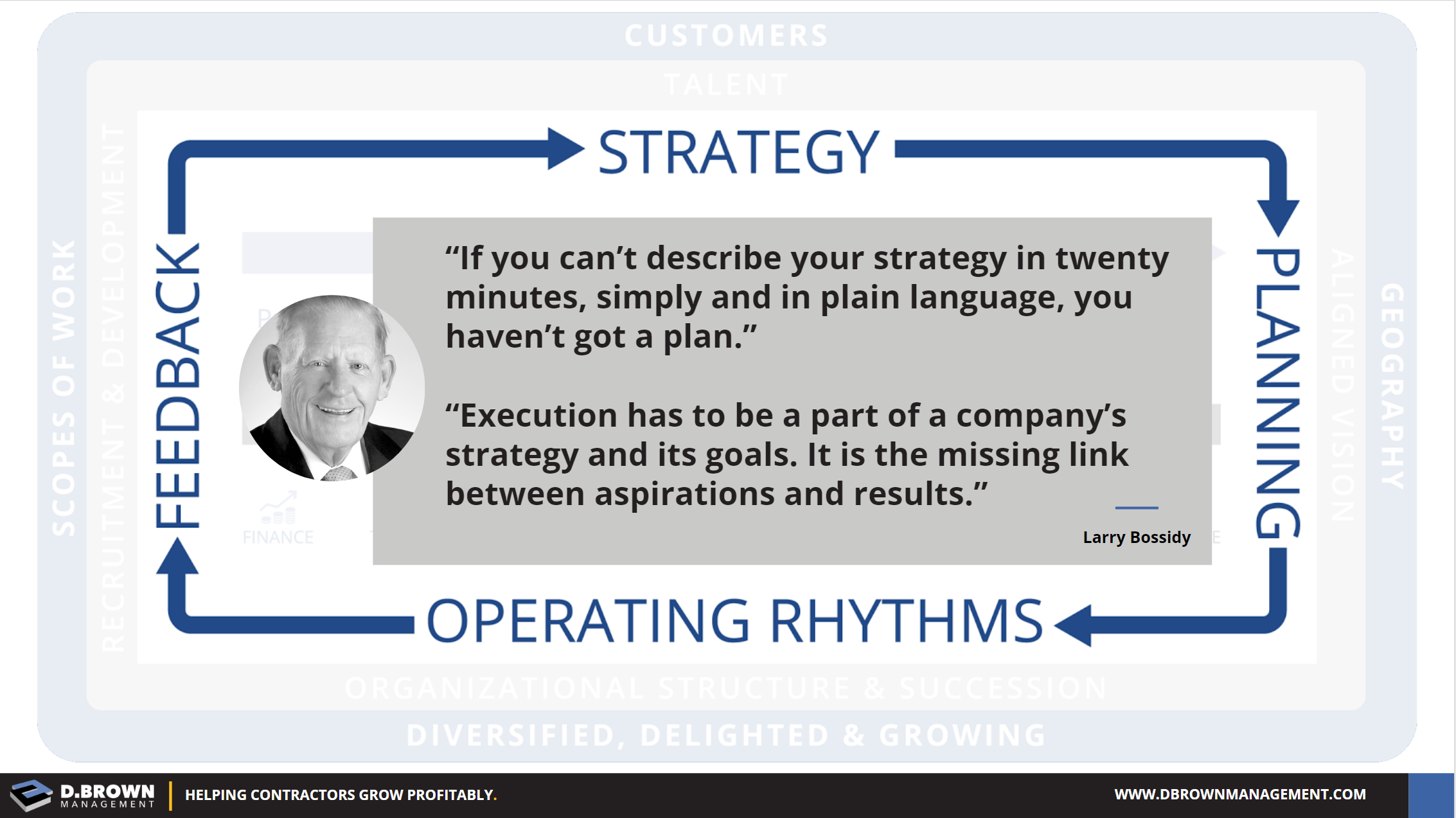
Contractor Business Model Business Operating Layer.
  1. Ownership & Senior Executive Leadership:  Defining what you want the business to look like over 10+ years and how the business will be setup for the next generation of leadership.  
  2. Business Operating Layer: This is the layer that ensures execution of the long-term strategy and delivers the financial returns required by the owners.
  3. Project Execution Layer:  This is where the rubber meets the road and value is added to your customers.  This layer makes up the majority of the talent, time and other resources in any contracting business.  This includes all project related people and support. This is the foundation and any weaknesses here will show up everywhere.  

How many of the problems you are having at the Project Execution Layer are due to weaknesses in the Business Operating Layer?   

Learn More


Building a Systems Development Team - Risk
Minimizing the business risk of a developer leaving. The better you are able to make your company a great place to work (culture & communication), the easier it will be to retain your top talented team members.
If a Problem is Worth Solving, It's Worth Solving All the Way
Not all problems are created equal and not all problems are even worth solving. When they are; be aggressive in solving them so they never come up again. Remember that 90% of continuous improvement is just about eliminating problems consistently.
Contractor Growth Cycles and Decision Points
As contractors grow, they must make decisions and changes around five key areas. At these decision points, they may be experiencing some or all of the eight typical symptoms including stress, customer complaints, and inconsistent growth.